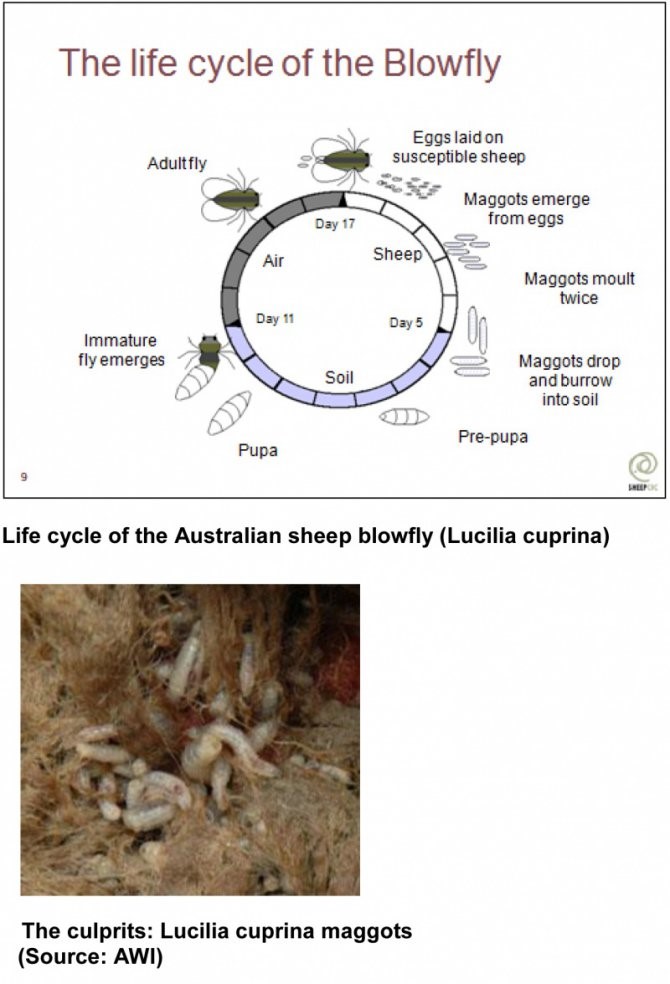
Fly strike in Australia is a huge welfare and economic issue for the sheep industry. Caused predominantly by the opportunistic Lucilia cuprina species of fly, and more of a risk after heavy rainfall. The blowfly lays eggs on open sores, areas of fleece rot or in heavily faecal or urine-stained fleece. From here the eggs hatch in as little as 8 hours and an adult fly can lay as many as 300 eggs every 4-8 days. Once hatched, the maggots begin feeding on the flesh of the sheep immediately.
The signs of fly strike are often subtle without close inspection as strike lesions start off being small. Sheep will show signs of discomfort and irritation such as leg stamping and bowing of the head. As cases progress, fleece will become darker and wet as the struck areas increase in size.
As the disease worsens, animals become depressed, they stop eating and drinking leading to weight loss. These animals are reluctant to stand or walk and become separated from the group. By this time the maggots will be quite large and tracts within the fleece will be see as they migrate towards healthy tissue. If left untreated, these cases will die quickly and so early detection and intervention is paramount. Flocks that have had clinical cases are more likely to have further cases so increased monitoring of the flock is advised.
Treatment of fly strike requires the wool to be sheared with a minimum of a 6cm margin of unaffected fleece. Applying a registered flystrike dressing such as Extinosad can kill the maggots but may need reapplying as any remaining eggs on the fleece hatch. Struck sheep should be removed from groups as they will remain attractive to the blowfly, and so this will reduce the risk to others.
Prevention of flystrike is based around insecticides, culling, management tools and breeding strategies. The insecticides need rotating to prevent resistance and the same product should not be used within the same wool cycle. Breeding strategies should be as such that animals that have been struck should not be bred from again and decision making about retaining high-wrinkle sheep should be well thought through. Crutching, dagging and shearing should be part of your annual management strategy in addition to avoiding faecal staining by monitoring internal parasite burdens with regular faecal egg counts. By ensuring crutching has been completed 6 weeks before the risk period for flies will help reduce the numbers of flies that hatch and thus minimise your risk.
If you have any concerns about the best approach, please contact us at the clinic.
image from https://www.lls.nsw.gov.au