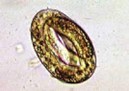
Faecal egg counts (FEC) or worm egg counts (WEC) are an easy, non-invasive and cheap way of determining the presence and severity of parasitic worm burdens. Knowing your stock’s status allows you to make informed management decisions and reduces the need for unnecessary treatment. As a result, animal health is improved, drug resistance is mitigated, and unnecessary costs associated with labour and purchasing product are avoided.
The outdated approach of routinely drenching (blindly) without any knowledge of worm burden status or a pasture management plan is likely to lead to long term issues like drench resistance and poor production, which can be costly. Routine FECs offer an opportunity to determine if drenching is even necessary, and if so, which mobs or age groups require it. A more strategic approach also allows us to monitor drench effectiveness, reducing the stress, costs and health issues that are associated with drench resistance. Carrying out FEC before drenching and following up with a second tests approximately 10-12 days after drenching allows us to objectively measure how well the drench has been at eradicating the parasites. If egg levels do not drop by the expected >95% after treatment, this is a clear indicator that the drench has been ineffective, the parasites are likely resistance to the active ingredient used, an alternative drench program should be adopted. Be sure to check your dosing gun is correctly calibrated prior to use to prevent underdosing.
Environmental conditions such as rainfall, temperature and pasture condition can all play a role in worm lifecycles, risk periods and pasture contamination. These vary from year to year so understanding your real time situation, and having a record of previous year’s patterns gives you the knowledge to create tailored herd health/ property management strategies that are effective for your stock’s situation.
Some individuals can carry a surprisingly high worm burden without presenting with any noticeable symptoms. These high shedding, silent carriers can cause havoc in a mob, and animals that are less resistant are put at risk. FECs are an important and helpful tool in detecting emerging issues and allowing for early intervention. So, what does a worm burden need to be at to warrant treatment? Season, age, body condition, pregnancy status and worm species are all factors that contribute to determining at what point a worm burden starts to cause issues for individual stock. While these figures are a useful starting point, they are a guide only and your veterinarian should be consulted when determining the best parasite management plan.
The McMaster technique is a simple quantitative faecal egg count test used to estimate eggs per gram (represented as e.p.g) in a known volume of faecal suspension to the nearest 50 e.p.g. X2 0.15ml of solution is placed into the counting chambers and the sample is examined under a microscope. Systematically, eggs lying within the chambers are counted and an e.p.g result calculated using the following formula;
EPG = total eggs counted in both chambers x50.
This quick method allows us to accurately monitor strongyle type eggs, Nematodirus, tapeworm (to an extent) and coccidia burdens. Some species like Lungworm, encysted tapeworm and Liver Fluke require additional testing and should not use the McMaster technique as a sole means of determining status. To minimise the chance of missing potential eggs, always used a fresh faecal sample, ideally less than 24 hours old. If samples are being pooled, bring in samples from individual animals (with clearly labelled ID). The lab will pool the samples. Refrigerate the sample if there is going to be a delay in getting it to the lab. It is important to point out that if no eggs are seen, it does not guarantee an animal or mob are parasite free, it just means that no eggs were detected in that particular sample. If a result comes back low or negative but an animal is still presenting with symptoms, consult your veterinarian.
| E.P.G | Burden | Action Recommended |
| <200 e.p.g | Low | No treatment required. Monitor and retest in approx. 12 weeks. |
| 200 – 500 e.p.g | Medium | Consider drenching. Consult your vet to discuss most appropriate options. |
| >500 e.p.g | High | Drench required. Consult your vet. Retest approx. 2 weeks after Tx to monitor effectiveness |
| >1000 e.p.g | Very high | Immediate treatment required. Consult your vet immediately as additional Tx may be required. |
| Cocci >5000 o.p.g | Very high | Treatment required. Additional speciating may be necessary. |
There are several parasite species that we look for on worm egg counts, and a burden can present differently depending on the species. Remember, targeted selective treatment, when used in conjunction with pasture rotation and routine testing will ensure effective parasite control. Consult your veterinarian to discuss the most appropriate, safe and effective treatment group.
| Parasite | Host Species | Symptoms | Notes |
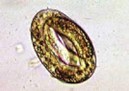
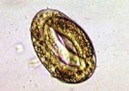
| StronStrgyles (roundworms) | Cattle, sheep, goats and alpacas | Weight loss, poor coat condition, scours. Can cause death suddenly. | |
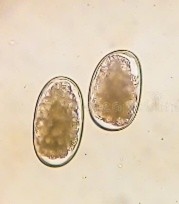
| Nematodirus spp. | Youngstock – lambs, kids, calves | Scours, dehydration, poor growth rates | Adult stock generally have an acquired immunity to Nematodirus infection because of previous exposure. |
| Coccidia (oocysts) | Calves, lambs, kids and alpacas | Scours sometimes with blood or mucous, dehydration, weight loss, poor coat condition | Protazoan parasite. These are counted separately from other eggs seen in a sample. Treatment is also different. |
| Tapeworm | Sheep, goats, cows, camelids | Often subclinical, but high burdens can present with lethargy, anaemia, poor growth or pastey scours. | Encysted tapeworm will not be detected in a FEC. Additional blood testing may be required along with observation of clinical signs. |
| Liver Fluke | Sheep, goats, cows, camelids | Anaemia, bottle jaw, weight loss, reduced production. | Specific sedimentation test is required as shedding is sporadic and eggs can be easily missed. Antigen testing is also accurate and detects infections sooner. |
| Lungworm | Sheep, goats, cows, camelids | Persistent cough, increased respiratory rate and difficulty breathing poor growth rate in youngstock, reduced milk production in adult cows. | Baerman Test is preferred as FEC can be unreliable is these cases. |
References:
Morgan. E. & Williams. D., 2023, COWS – Control of Lungworm in Cattle, Queen’s University (Belfast)
Loughman. T., et al., 2024, Faecal Egg Counts in Australian Pasture Based Dairy herds, Veterinary Parasitology: regional Studies & Reports, Vol 51 101028
Hutchinson. G., 2009, Nematode Parasites of Small Ruminants, Camelids & Cattle Diagnosis with Emphasis on Anthelmintic Efficacy & Resistance Testing, EMAI, Australia & NZ Standard Diagnostic Procedures
Sabantini. G., et al., 2023, Practical Guide to the Diagnostics of Ruminant Gastrointestinal Nematodes, Like Fluke & Lungworm Infection: Interpretation & Usability of Results, Parasites and Vectors, Vol 8 (16)
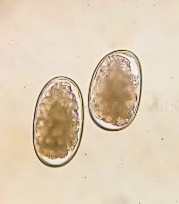
StronStrgyles

Nemarodirus spp.
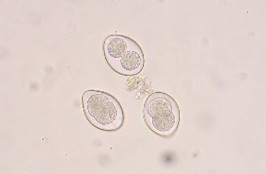
Coccidia (oocysts)
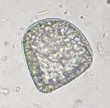
Tapeworm
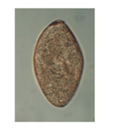
Liver Fluke