
Hand rearing an orphan goat or lamb can be challenging, especially when they didn’t receive colostrum in the first 24-48 hours of life. This document is designed to assist you in the care and rearing of your new orphan:
MILK FEEDING
Colostrum is usually acquired from the mother’s milk in the first 24-48 hours of life. However, a lot of orphans do not receive this due to mismothering or rejection. Colostrum is very important as it is rich in substances that help make up the baby’s immune system. If your orphan is less than 48 hours old then please source colostrum to bottle feed. Occasionally, we have frozen colostrum for sale, please contact us if you require colostrum.
Most commercially available milk replacement powders designed specifically for lambs and goats come in 20kg bags. Feeding of Divetelact is not recommended as it is low in lactose and energy.
Full cream milk powder can be used as an alternative to commercial milk replacers which may be favourable if you are only hand-raising one or two animals. To prepare, mix 1 cup of full cream powder into 3 cups of warm water. At CVLS we sell 500g tubs of milk replacer which you can purchase directly from us for a lamb specific replacement. Keep it in a container in the refrigerator until use and heat up when ready to feed. It is best practice to place the filled feeding bottle in a container of hot water and let it sit until the milk reaches a suitable temperature (approx. 30 degrees Celsius). The milk should never be microwaved as it creates uneven hotspots that can risk burning.
Ensure you test the milk on the skin on your inner wrist before feeding, if it burns or is uncomfortable on your skin then it will be too hot for the lamb/kids mouth and it poses risk of oesophageal or abomasal ulceration.
Often, orphaned goat kids (not applicable to lambs) will initially reject milk replacers. We recommend starting kids on pasteurised goat milk (this can be found in the milk section of the grocery store).
Blending the milk replacer with goat milk until the kid accepts the replacer helps with the transition.
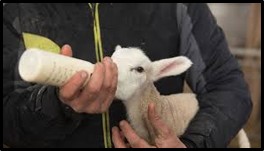
Volume of feed is essential as kids and lambs are renowned for being ravenous over-drinkers! Lambs and kids should be fed 15-20% of their body weight in milk or milk replacer each day. Overfeeding can lead to bloating, constipation or diarrhoea. Consider that their stomachs are only very small and cannot hold much at one time. Weighing lambs/kids once a week and calculating the target feed volume is optimal. Where possible, feed the orphan four times per day (three times a day minimum) for the first week and then transition to twice a day. If they weigh 2 kilograms, they will need 400mL of milk per day divided over two or three feedings.
Using human baby bottles are ideal for feeding small lambs and kids. Enlarging the hole in the standard nipple to allow for better flow will facilitate feeding.
HUSBANDRY
Keep your orphan warm and free from drafts and moisture. Heat lamps can be used to provide warmth but ensure they are kept out of reach to avoid burning. Dog crates are ideal for housing kids and lambs during the first weeks of life. Kids are very curious, so we recommend providing safe areas and pens for exploring, grazing, and exercising.
STARTING SOLIDS AND WEANING
Solid foods in the form of oaten or lucerne chaff and fresh water should be offered in the first week of life. Start with a small handful and increase when consumption is observed. Offer fresh chaff each day and discard refused feed.
At 2-3 weeks of age, orphans should be starting on a multipurpose weaner pellet (18-22% crude protein – check the back of the bag to see protein content) as well as chaff/hay. Begin with a tablespoon of pellets to start and replace daily (as with the chaff/hay). Once 3-4% of the orphans weight is being consumed in solid feed, usually 4-6 weeks of age, then weaning from milk should begin. Weaning can be very distressing for both you and your orphan – they can be very demanding/vocal when it comes to milk feeding. We usually advise weaning orphans when they are consuming over 1L of milk replacer per day. This can be started initially by reducing the number of feeds to twice a day, but their solid feed intake needs to be monitored closely.
Replace milk feeds gradually by substituting milk for 250-300ml of warm water, starting with one feed a day. It’s important that milk replacers are never diluted. This can help reduce the amount of vocalising for milk that the orphan may do during their weaning process. They will eventually lose interest in the bottle of water and vocalise less.
HUSBANDARY PROCEDURES
Vaccinations/worming
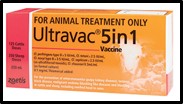
We recommend that lambs and kids be vaccinated at 4-6 weeks of age with Ultravac 5-in-1 vaccine and receive a booster 4 weeks after the initial dose. Then they get their usual annual booster thereafter. The vaccinations are sold in bulk at ag stores but at CLVS we sell them by the dose which is more convenient when you only have a few animals to vaccinate. If you would prefer us to vaccinate them for you or to show you how it is done, you book an appointment with us.
By the time kids and lambs are 6-8 weeks of age and starting to graze/eat solids worming/drenching should be considered. We recommend bringing us a sample of faeces (approx. 2g) so we can perform a faecal egg count to determine if worming is required. We will then advise on parasite control and drenching programs where appropriate.
Dehorning
If your goat kid or ram lamb is going to be kept as a pet, we recommend dehorning to reduce the risk of injury to children and other animals. Although, if they are going to be roaming large paddocks you should consider leaving horns intact so they can protect themselves from predators. If you choose to dehorn your goat kid or ram lamb, this needs to be done in the first 7 days of life, before the horn bud starts to erupt through the skin. We can do this for you at CVLS. If dehorning is delayed it requires major surgery and carries high risks of complications.
Tail docking
Lambs of heavy wool breeds should have their tails docked by 4-6 weeks of age (or sooner) to prevent excess faeces built up under their tails and subsequent fly strike. Fly strike is a painful and sometimes fatal condition where blowflies lay eggs in a sheep’s wet, soiled wool. When they hatch, the maggots will feed on the surrounding skin and tissues. If this is done at the 7-day mark then a rubber ring can be placed to remove the tail. If the tails are left for longer, then a surgical procedure may be required.
Castration
Male goat kids and ram lambs should be castrated at the same time as dehorning and/or tail docking. This can be done using the rubber ring method if done in the first 7 days of life. If left until they are older and testicles are well developed this may need to be done surgically.
COMMON ILLNESSES, VETERINARY CARE & EMERGENCIES
Scours
It is not uncommon for kids/lambs to suffer from scours/diarrhoea. If your kid/lamb is bright and continues to eat and drink, then provide oral electrolytes. The electrolyte feed should be given 2 hours prior to or after a milk feed. If you are feeding your lamb/kid four times a day, then consider replacing every second milk feed with the electrolyte feed to reduce risk of overloading. If feeding only twice daily, then in addition to the milk feeds is fine. If your kid/lamb becomes lethargic, refuses to suckle or stand at any time, contact us immediately.
Collapse/lethargy
If your kid/lamb becomes lethargic, refuses to feed, collapses or cannot stand, seek vet attention immediately. Neonates can become dehydrated or become low in blood glucose very rapidly, so these are emergencies in order to save the neonates life.
Teeth grinding
If your kid/lamb begins to grind their teeth and/or stops feeding, this can be a pain response. There is a possibility they have developed a stomach ulcer. It is very important to seek vet advice immediately.
Bloating
Stomach bloating can be life threatening in neonatal kids and lambs. There are many reasons why these animals can become bloated, all of which may require different treatments. Call a vet immediately if your lamb/kid becomes bloated, has difficulty breathing or is unable to stand.
Joint and navel ill
On day 1 of birth, neonatal kids and lambs should have their navels sprayed to prevent joint and navel infections. Navel dips should be made using 7% iodine solution, ensuring navels are evenly dipped and solutions are kept clean. If pens are dirty and damp, the infection risk will be greater even if navels are treated after birth. If your neonate becomes lame with swollen joints or they have a swollen navel give your vet a call to organize a visit and the appropriate treatment.
If you have any questions or concerns, please contact Compass Veterinary Livestock Services on 8556 2496
Amelia Cannadine BVB DVM