
Background
Grass tetany is a metabolic disease caused by low concentrations of magnesium (Mg) in the blood and cerebrospinal fluid. Mg is not stored in the body; therefore, a constant source in the diet is required. It occurs due to insufficient dietary Mg or excessive dietary potassium and/or nitrogen. Risk factors for this include:
- Animals in late gestation/early lactation because they have higher Mg demand
- Stock grazing lush pasture with low dry matter content (reducing cud chewing and digestion time).
- Pasture fertilized with nitrogen and/or potassium is a risk as it will inhibit Mg uptake
Typically, we see grass tetany in cattle grazing on fresh, rapidly growing pasture after periods of reduced feed intake, for example after poor weather, yarding/transport, or over the calving period. This lush pasture moves through the gut much quicker than hay, which reduces the opportunity for magnesium to be absorbed. Sudden death with signs of struggling (disturbed ground surrounding the animal) can be the first sign of grass tetany in the herd and often stress can trigger clinical signs.
What does it look like?
Mg is required for normal nerve conduction, muscle function and bone mineralization, hence most visible clinical signs are attributed to nerve and muscle function.
Grass tetany can present in different ways;
- Peracute – staggering, collapse, convulsions, paddling and death
- Acute – twitching ears, grinding teeth, salivation or frothing at the mouth, muscle tremors, aggression (including charging), hyper-responsiveness, bellowing. The animal can become progressively uncoordinated and develop muscle spasms and can die within hours.
- Sub-acute – slight inappetence and agitation over 3-4 day period, reduced milk yield, diarrhoea, tucked abdomen, stiff gait, hyper-responsiveness to noise/handling
- Chronic – usually seen around 6 weeks after calving and is associated with long term Mg deficiency. Often animals will have thin/rough coats, pale gums due to anaemia and possibly udder oedema/swelling and wasting. Often chronic hypomagnesaemia is also associated with hypocalcaemia (milk fever) and decreased milk yield.
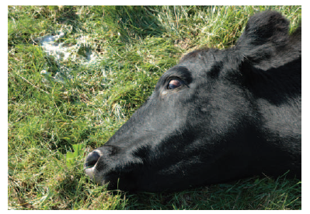
Note the salivation and frothing at the mouth, dilation of nostrils and retracted eyeballs
Credit: Disease of Cattle in Australasia
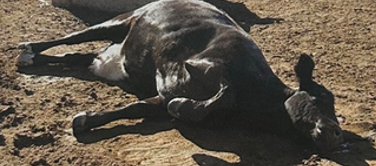
Note the flattened and disturbed dirt around the legs of this cow.
Credit: Disease of Cattle in Australasia
Grass tetany can be confused with the early signs of hypocalcemia (milk fever), nervous ketosis, clostridial infections or lead poisoning. Diagnosis is often made on clinical signs and confirmed with blood testing.
If a dead animal is found on farm and grass tetany is suspected, we can test the fluid in the eye for magnesium levels. Please call and speak to us should this situation arise.
How is it treated/prevented?
To increase chances of successful treatment, intervention is necessary as soon as clinical signs are noticed. Ideally, this involves slow administration of intravenous magnesium and calcium (4in1 flowpacks). In cases where this isn’t possible, a flowpack under the skin is advisable. Note that on some occasions, additional sedations are needed to stop the cow convulsing.
Other treatment options include:
- Magnesium sulphate fluids given under the skin
- Oral magnesium supplements
After treatment, it is common for a cow to take approximately 30mins to stand. There is no need to rush her.
There are a multitude of methods that can be used to prevent grass tetany including:
- Feeding hay
- Mg lick blocks (some better than others!).
- Pasture dusting with Mg
- Adding Mg to water troughs, although this is unpalatable
- Using rumen Mg bullets
A good starting point for prevention is ensuring stock have access to 4kg/head/day of hay as feed during times of lush pasture growth, plus Mg lick blocks.
Depending on your situation, one supplement may be more practical than others, for this reason, feel free to call the clinic and discuss the best option.
As always, if you have any questions, don’t hesitate to get in touch with us at the clinic on
8556 2496.